lesson
Kitchen Knife Types: What You Actually Need
Understand the useful differences between chef's knives, santokus, paring knives, and other common kitchen blades.
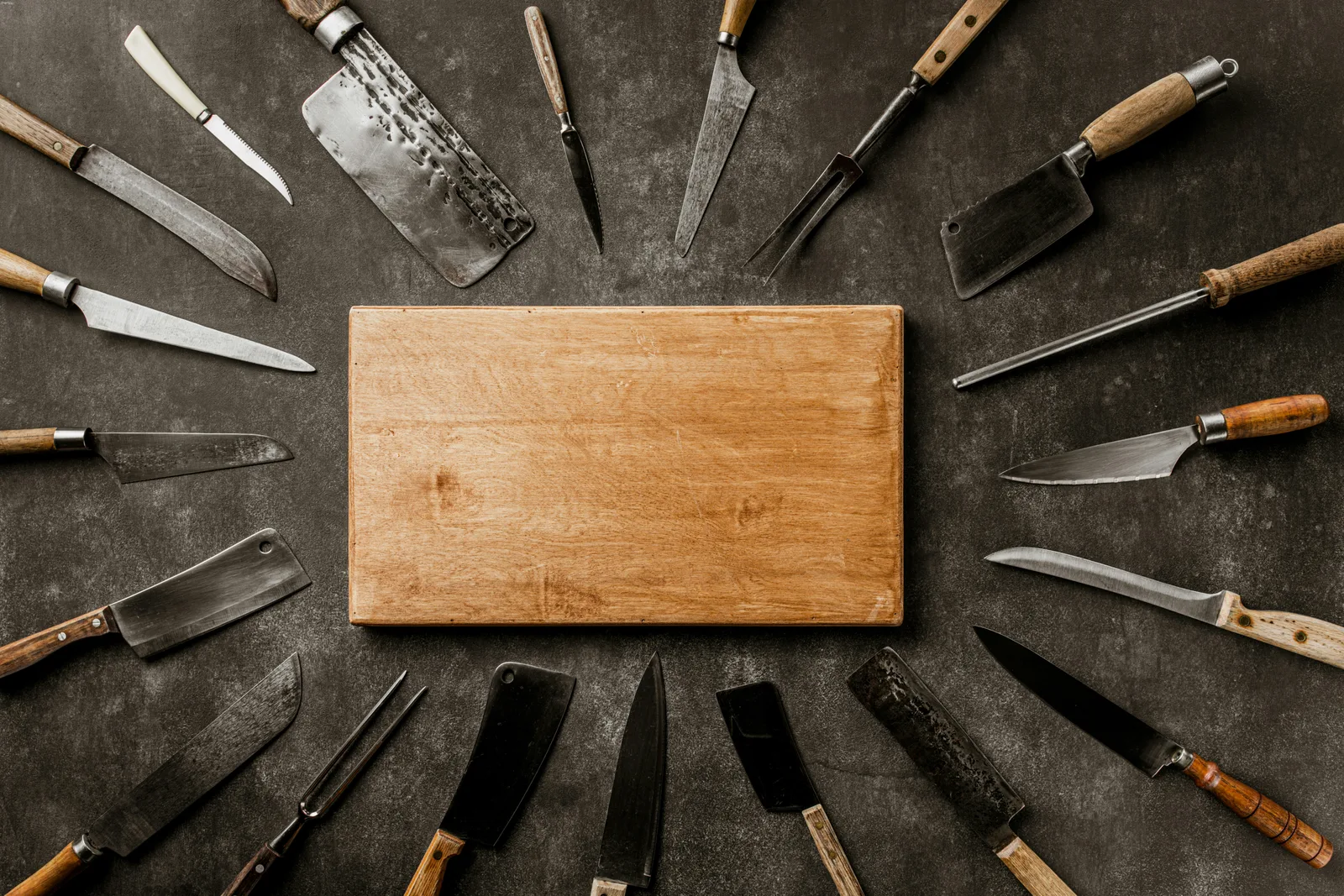
Knife names make the aisle look more complicated than the work is. Most home cooks need one comfortable general-purpose knife, a small knife for close work, and a serrated knife only if they regularly cut bread or delicate produce.
The useful differences
A chef's knife has a broad blade, usually 8 to 10 inches long, with a curved edge that works well for rocking through herbs and chopping large amounts of food. Its height gives your knuckles room above the board and makes the side of the blade useful for moving chopped ingredients.
A santoku is typically shorter, lighter, and flatter along the edge. It favors a forward-and-down chopping motion instead of a dramatic rock. It is not automatically sharper than a chef's knife; the better choice is the shape that feels natural in your hand.
A utility knife sits between a chef's knife and a paring knife. It can be handy for sandwiches and small produce, but it often duplicates work your main knife already does.
A paring knife has a short blade for peeling, trimming, coring, and work done in the hand. It is useful, inexpensive, and does not need to match your main knife.
A serrated knife uses pointed teeth to start cuts through crusty bread, ripe tomatoes, and soft cakes without crushing them. Serrations stay usable for a long time but are harder to sharpen at home.
Boning, fillet, cleaver, and nakiri knives solve narrower problems. Buy one after a repeated task makes its advantage obvious—not because a block has an empty slot.
What matters more than the label
Hold the knife as if you were about to chop. The handle should not create a pressure point, and your knuckles should clear the board. The blade should feel controllable rather than merely light or impressive. A slightly textured handle is easier to manage when your hands are damp.
Look for a blade that is straight, an edge without chips, and a handle with no gaps where food can collect. Full-tang construction and premium steel can be nice, but neither guarantees comfort, geometry, or a good factory edge.
German, Japanese, stamped, and forged
German-style knives are often a little thicker and tougher, while Japanese-style knives are often thinner and hold a more acute edge. Those are tendencies, not quality grades. Thin edges cut beautifully but tolerate twisting and hard contact less well.
Forged knives are shaped from heated steel; stamped knives are cut from sheet steel. Modern stamped knives can be excellent, light, and inexpensive. Judge the finished knife, not the manufacturing word on the package.
The practical starter set
Start with a 7- to 8-inch chef's knife or santoku. Add an inexpensive paring knife. Add a serrated bread knife if you buy unsliced loaves, cut large sandwiches, or work with delicate-skinned produce often. That set handles nearly every ordinary home-kitchen task.
Whatever you choose, it will only perform as well as its edge and work surface. Next, learn how to keep kitchen knives sharp and how to choose a cutting board.