lesson
Baking Measurements: Math + Chemistry
Learn when exact ratios control the result, when tasting matters more, and how to measure without expensive equipment.
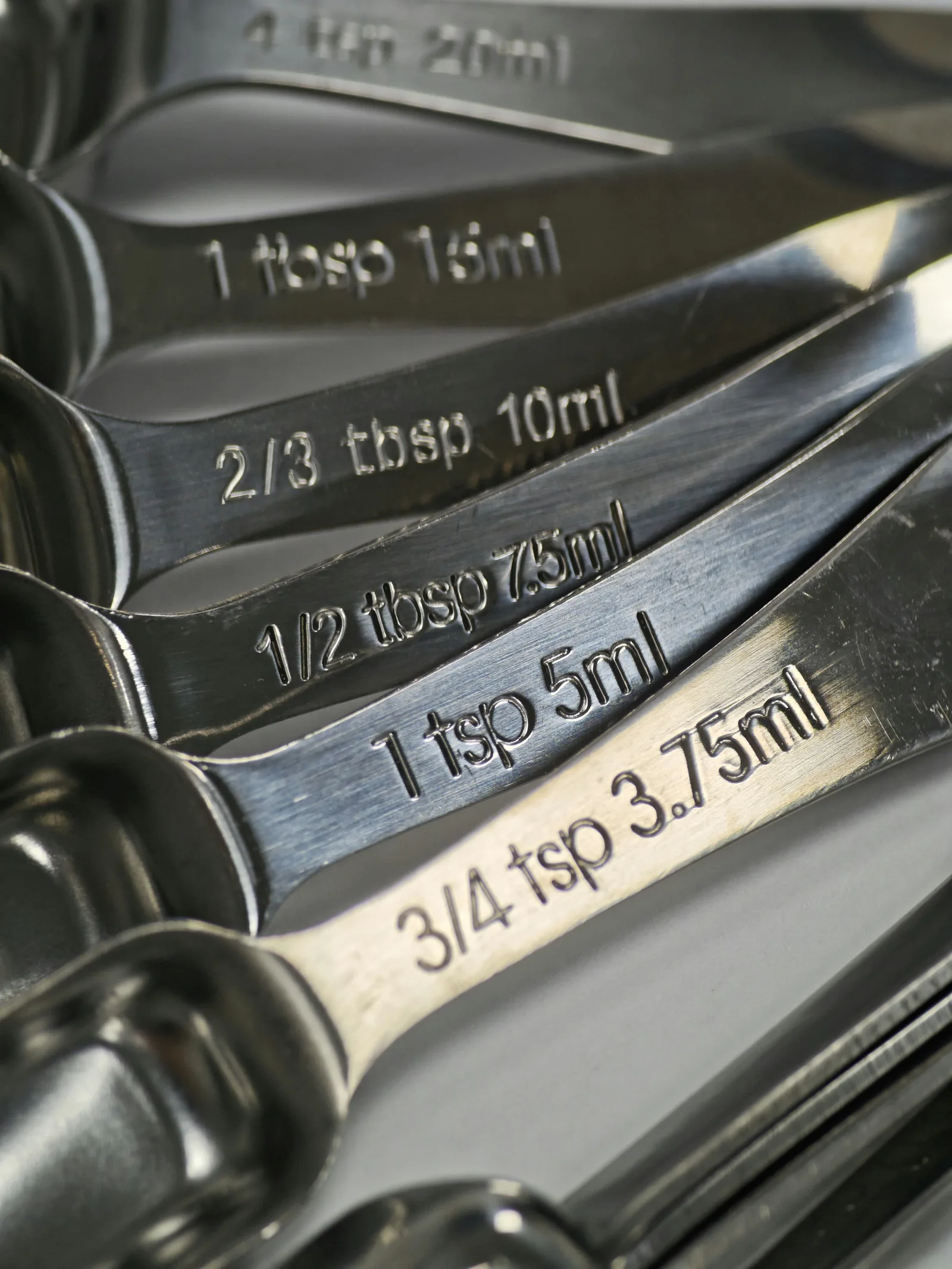
Baking is a highly controlled construction. Flour provides structure, water hydrates, fat tenderizes, eggs bind and set, sugar changes moisture and browning, and leaveners create gas for rising. Change one part enough and the entire structure changes with it. That is why a casual extra half scoop of flour can turn a soft cake dry and dense.
Most stovetop cooking is a more open system. A soup with 10 percent more carrot is still soup. A stir-fry can take an extra serving of snap peas. Tomato sauce can be adjusted after tasting. Precision still helps with consistency, but the food usually gives you more chances to correct course. Baking doesn't give you the same margin of error.
Weigh Baking Ingredients When Possible
A low-cost digital scale is the simplest path to repeatable baking. Put a bowl or container on the scale, reset (tare) it to zero, and add each ingredient by weight. Weight avoids the packing, scooping, and cup-shape differences that make volume measurements inconsistent, especially with flour.
If a recipe provides only cups, use the method its author specifies. Measuring baking ingredients by weight will give you the best consistency across multiple recipes. Otherwise, fluff the flour by stirring it with a spoon, spoon it gently into the measuring cup, and level the top without packing.
Measure liquid at eye level in a liquid measuring cup. Use actual measuring spoons rather than tableware for small, powerful ingredients such as salt, baking soda, and baking powder. Use the same technique for leveling the measuring when adding ingredients. An extra 1/8 teaspoon, 4 times, is an extra 1/2 teaspoon. For ingredients like baking soda or baking powder, an extra 1/2 teaspoon can change the consistency.
Temperature is a measurement too. The temperature in your home kitchen constantly changes with sunlight, outside weather, and appliance use. Butter that should be softened behaves differently when completely melted. Dough that has doubled in size is more useful information than a timer alone. An oven thermometer can reveal an oven that runs hot or cold.
Cook by Ranges and Feedback
For soup, stew, stir-fry, pasta sauce, roasted vegetables, and similar meals, adjust taste ingredients in taste groups. Add salt, acid, heat, sweetener, and thickener in small increments. Taste, observe, and adjust. Pan size, burner strength, ingredient moisture, and personal preference all change the useful amount.
Most experienced bakers will judge ingredients by sight and feel—a little more flour, a pinch of salt, or a slight adjustment of leavening. While very powerful, early in your cooking journey do not rely solely on intuition. Measure carefully, then use touch and appearance to verify that the dough or batter feels correct. You are not going to know what good dough feels like until you have made it a few times, so learn this technique but do not rely on it.
Precision matters more when cooking rice by absorption, making a concentrated brine, preserving food, controlling food safety, or using a potent ingredient. Follow a tested recipe for canning and other preservation; improvisation and not following official guidelines can create hazards that taste cannot detect and could be harmful or potentially deadly.
Know which kind of recipe you are reading
When a baked recipe fails, first check ratios, ingredient identity, oven temperature, kitchen environment, and mixing method. When dinner tastes wrong, first check salt, acid, sweetness, bitterness, heat, and texture. Baking needs more controlled inputs, while other forms of cooking, such as stovetop cooking, often need active correction.
This is not a contest between science and instinct. Baking uses sensory judgment inside tighter ratios and stricter guidelines. Cooking uses ratios too, but often leaves enough room to taste your way home. Next, learn what flour contributes beyond baking and when to use baking soda or baking powder.