lesson
Baking Soda vs. Baking Powder: What Each One Does
Understand what each chemical leavener needs, why recipes sometimes use both, and what common substitutions change.
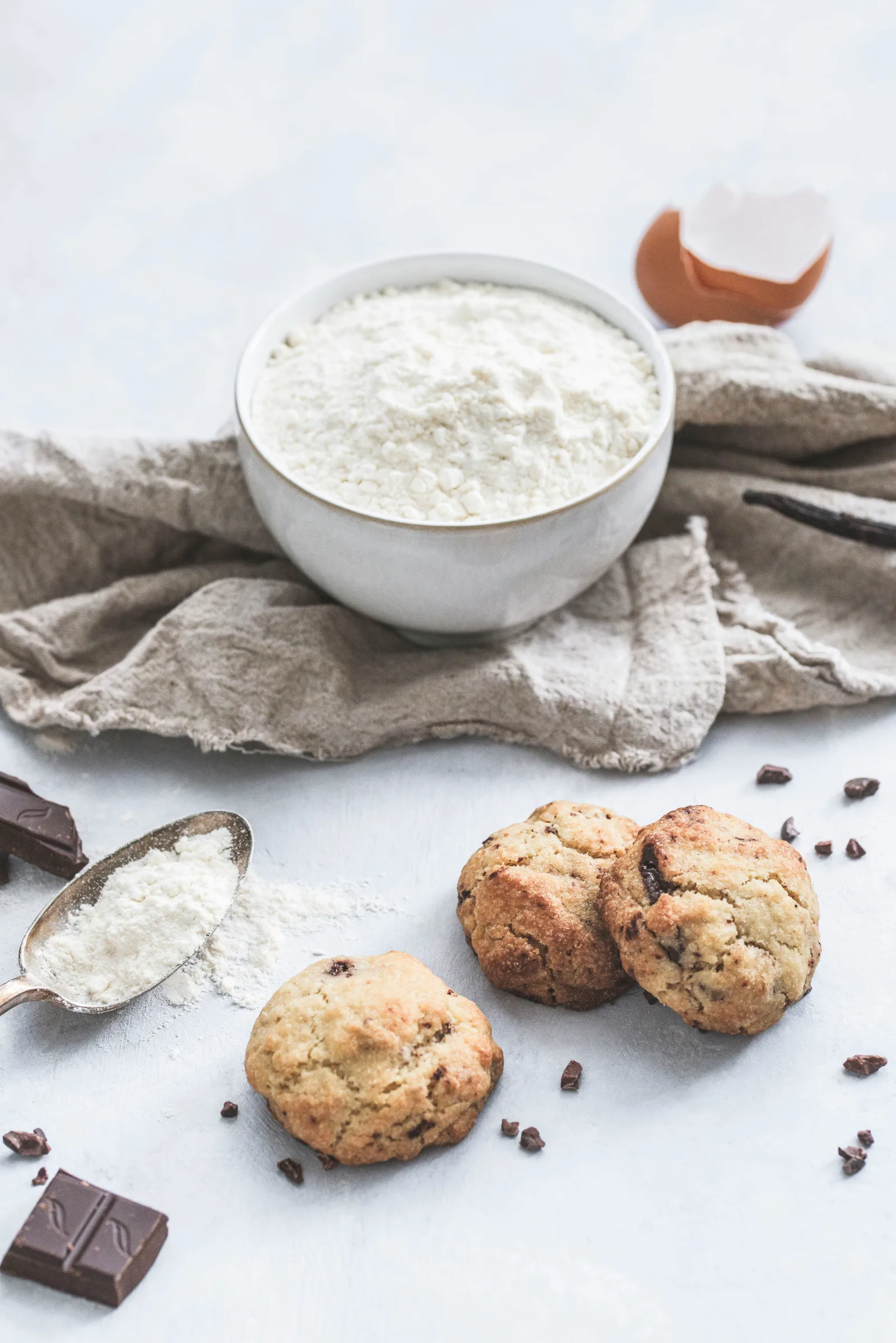
Baking soda and baking powder both help doughs and batters rise by producing carbon dioxide, but they are not interchangeable spoon for spoon.
Baking soda is sodium bicarbonate, a base. It needs enough acid and moisture in the recipe to react. Buttermilk, yogurt, citrus juice, vinegar, natural cocoa, and molasses can supply acid, although they differ considerably in strength. Brown sugar may contribute some acidity through its molasses content, but it should not automatically be treated as a complete acid source.
Baking powder contains sodium bicarbonate plus powdered acid and starch to keep the mixture dry. Most supermarket baking powder is double-acting: it releases some gas when moistened and more as it heats. Be sure to double-check your recipe because it may specify the type of baking powder required.
What baking soda changes besides rise
Baking soda affects more than just the rise of the dough or batter. Chemically, the baking soda raises the pH which can change many factors including:
- Browning: more alkaline mixtures brown more readily
- Flavor: can reduce sharp acidity; excess can taste bitter, alkaline or soapy
- Spread: in some cookies, baking soda can encourage ingredients to spread
- Texture: affects how proteins set and how ingredients such as cocoa behave
- Color: natural cocoa can become darker when a more alkaline batter is made
These effects are why baking soda should be measured as carefully as any other leavener. Adding more may produce additional browning and spread, but it does not necessarily produce a better rise. Once the available acid has been neutralized, excess baking soda remains in the food and create unpleasant flavors, unusual colors, and poor texture. The amount specified in a tested recipe is therefore intended to balance acidity, structure, flavor, and appearance—not simply make the batter expand.
How baking affects the finished bake
Because baking powder contains both sodium bicarbonate and powdered acids, it provides a more self-contained and predictable source of leavening. It generally has less effect on the overall pH of a recipe than unbalanced baking soda.
Baking powder often encourages a more even, upward expansion, although the final result still depends on the batter, mixing method, oven temperature, and other ingredients. Excess baking powder can create a bitter or metallic flavor, a coarse crumb, or a rapid rise that later collapses.
Why a recipe may use both
A recipe may contain an acidic ingredient, such as buttermilk, because its flavor and texture are desirable. However, the amount of baking soda appropriate for balancing that acidity may not provide all the leavening the recipe needs. Fully neutralizing the acid may also remove more of its tang than the recipe intends.
In that situation, baking soda can neutralize part of the acid, encourage browning, and influence spread, while baking powder supplies additional, more predictable lift. The combination balances flavor, color, texture, and structure rather than simply producing as much gas as possible.
Too much baking soda can create a soapy or bitter flavor and may cause a baked good to brown or spread excessively. Too much baking powder can leave a metallic or bitter note and produce an uneven, coarse rise that collapses. Too little chemical leavener may leave the finished food dense, squat, or gummy.
Measure and mix carefully
Use level measuring spoons and follow a tested recipe when one is available. Sprinkle the leavener over the dry ingredients, then whisk thoroughly so it is distributed evenly. Poor distribution can leave concentrated pockets that taste bitter or cause irregular holes in the crumb.
Once the wet and dry ingredients are combined, do not leave the batter waiting unnecessarily. Baking soda begins reacting when it encounters moisture and acid, while double-acting baking powder releases some gas when moistened and more when heated.
Check whether it still works
Chemical leaveners can weaken after long storage or repeated exposure to humidity. Baking powder is particularly susceptible because it already contains both the alkaline and acidic parts of the reaction. Baking soda is relatively stable when kept dry, but poor storage can still cause contamination, clumping, or reduced reliability.
Store both products tightly closed in a dry cupboard and label the opening date.
To check baking powder, stir a small spoonful into hot water. It should begin bubbling promptly. To check baking soda, combine a small amount with an acid such as vinegar or lemon juice; it should foam immediately.
These tests can confirm that the leavener is still reactive, but they cannot precisely measure its remaining strength. If the reaction is weak or delayed, replace the product rather than attempting to compensate by adding more.
Substitute only with a plan
Baking powder contains baking soda along with powdered acids and starch. Replacing baking soda with the same amount of baking powder therefore produces a different amount of leavening and may leave the recipe's existing acid unbalanced.
Replacing baking powder with baking soda removes the powdered acids needed to support the reaction. Unless the recipe already contains enough acid, some of the baking soda may remain unreacted.
General conversion ratios can estimate leavening strength, but they do not restore the original balance of acid, liquid, salt, flavor, browning, and texture. A mathematically similar amount of potential lift is not necessarily a functionally equivalent substitution.
For reliable results, use the leavener named in the recipe. If you must substitute, use a conversion from a tested baking source written for that specific formula. For a broader guide to ingredient roles, read How to Substitute Ingredients Without Ruining Dinner.