Applied recipe
Stainless-Steel Chicken and Cabbage Stir-Fry
Use a wide stainless skillet, small batches, and a simple pantry sauce for browned chicken and crisp-tender vegetables.
- Servings
- 4
- Prep
- 20 min
- Cook
- 20 min
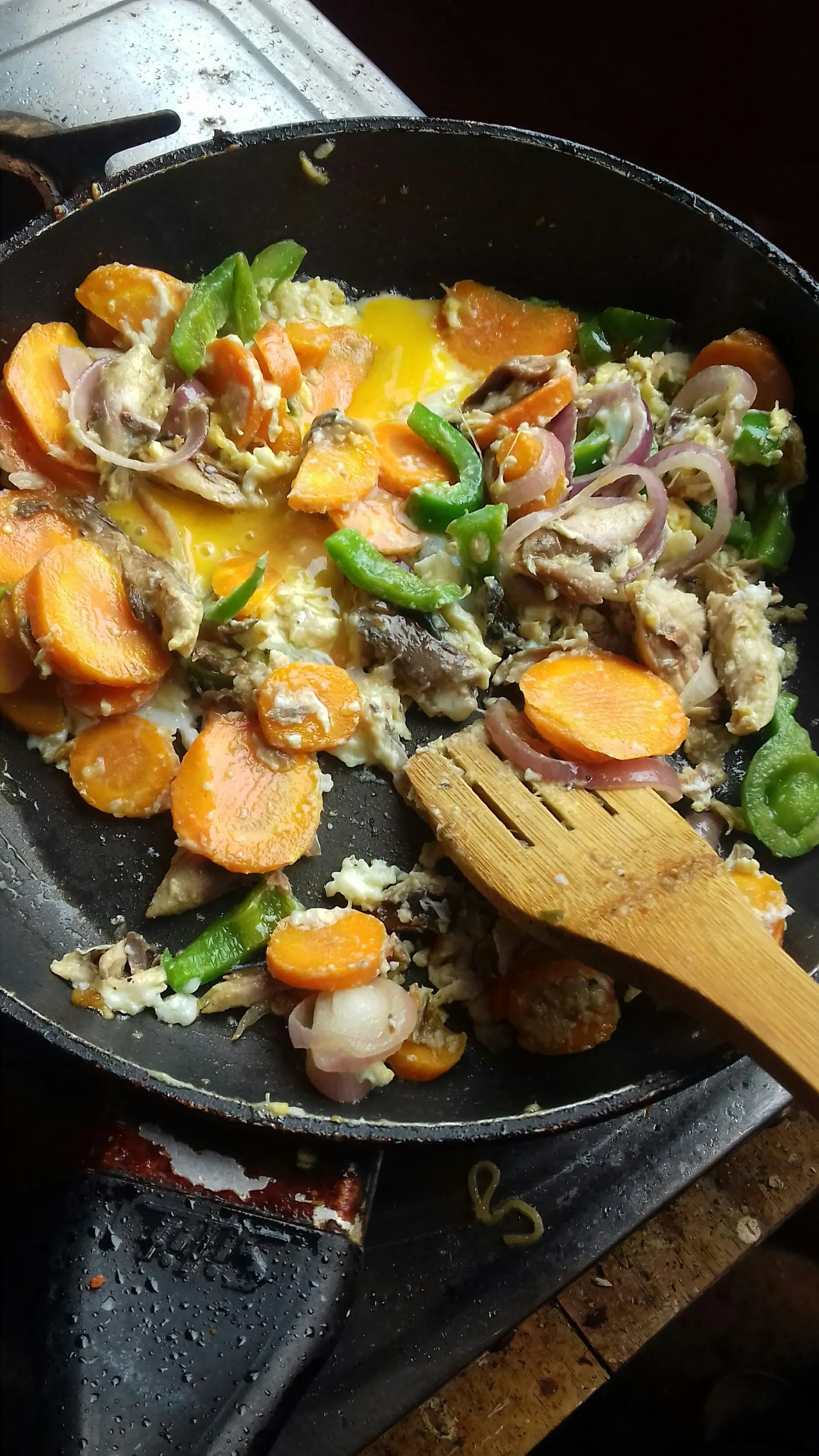
A home skillet is not a restaurant wok, but it can still make a good stir-fry. The key is to prepare everything first, dry the food, and cook in stages so a stainless-steel pan stays hot enough to brown instead of steaming.
Needed equipment
- 12-inch stainless-steel skillet or saute pan
- Sturdy spoon, spatula, or other heat-safe stirring utensil
- One clean plate or bowl for the cooked chicken
- Knife and cutting surface, unless using pre-cut ingredients
Optional equipment
- Thin metal spatula for getting cleanly under browned food
- Extra prep bowls for arranging every ingredient beside the stove
- Instant-read thermometer for the most reliable doneness check
Ingredients
- 1 pound boneless chicken thighs, cut across the grain into 1/4-inch strips
- 1/2 small green cabbage, cored and cut into 1/2-inch ribbons
- 1 medium carrot, cut into thin matchsticks or grated
- 1 small onion, thinly sliced
- 2 cloves garlic, finely chopped
- 2 tablespoons neutral high-heat cooking oil, divided, plus more if needed
- 3 tablespoons soy sauce
- 1 tablespoon vinegar or lime juice
- 1 tablespoon brown sugar or white sugar
- 1/2 cup water
- 2 teaspoons cornstarch
- Pinch of cayenne or red pepper flakes, optional
- Cooked rice, for serving
Instructions
- Stir the soy sauce, vinegar, sugar, water, cornstarch, and optional chile with a fork or spoon until no dry starch remains. Put the sauce, vegetables, chicken, oil, and clean plate beside the stove before heating the pan.
- Pat the chicken dry. Heat the empty skillet over medium-high until a drop of water flicked onto the surface forms a bead that moves briefly before evaporating. Do not continue heating an empty pan after this point.
- Add 1 tablespoon oil and swirl. Add half the chicken in one layer. Leave it untouched until the underside browns and releases with a gentle nudge, 2 to 3 minutes. Stir and cook until no raw exterior remains, about 1 minute more. Transfer to a clean plate and repeat with the remaining chicken, adding oil if needed.
- Let the pan recover its heat. Add the onion and carrot. Cook with frequent tossing for 2 minutes. Add the cabbage and cook until bright and crisp-tender with browned edges, 3 to 5 minutes. If the pan surface goes dry, add a teaspoon of oil rather than letting residue burn.
- Lower the heat to medium. Add the garlic and stir for about 20 seconds.
- Stir the sauce again because the cornstarch settles. Pour it around the vegetables and scrape up the browned residue. Return the chicken and any juices. Simmer, tossing, until the sauce turns glossy and the chicken is cooked through, 1 to 3 minutes. With a thermometer, verify 165°F in a thick piece. Without one, cut the thickest strip open; its center should be opaque and steaming, though temperature is the more reliable check.
- Taste and adjust with a little soy sauce for salt, vinegar for brightness, or water if the sauce is too thick. Serve over rice.
Sensory indicators
Chicken should sizzle immediately and remain in separate pieces. It will release more cleanly after a brown crust forms. Vegetables should retain color and a little snap. The finished sauce should cling in a thin glossy layer rather than pool like broth or set like gel.
Common mistakes
If the chicken releases a puddle, the pan was crowded or the meat was wet. Remove some and let the liquid evaporate before continuing. If browned residue turns black, reduce the heat and wipe out the burned material before making the sauce. If the sauce clumps, add water a tablespoon at a time and toss over gentle heat.
Stainless steel rewards patience: read why food sticks to a pan before forcing meat from the surface.
Substitutions
Use thinly sliced pork, firm tofu, mushrooms, or drained chickpeas instead of chicken. Tofu and mushrooms need their own uncrowded browning stage. Broccoli stems, bell pepper, celery, frozen peas, and other quick-cooking vegetables can replace part of the cabbage. Flour does not replace cornstarch in equal amounts or produce the same glossy texture.
Storage and reheating
Cool promptly and refrigerate for up to 3 days. Reheat in a skillet over medium heat with a splash of water until the chicken is steaming hot. Store rice separately when possible and refrigerate it promptly.
Variations
Add grated ginger with the garlic, use a teaspoon of toasted sesame oil after cooking, or replace the sugar and vinegar with two tablespoons of pineapple juice. Keep the staged method even when the flavor changes.